雨声筒:历史、作品与在线演奏
雨声筒(Rainstick):摇、刮或摩擦带来宽带噪声。
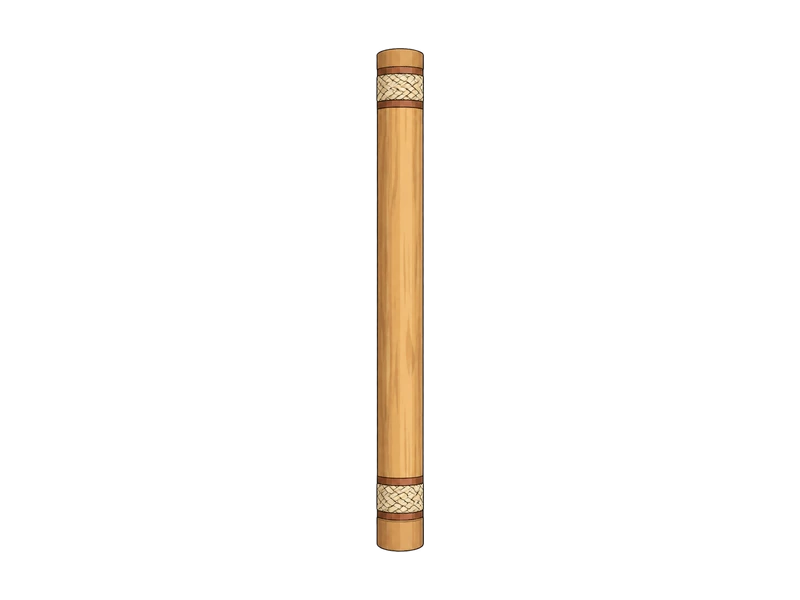
南美洲 · H-S 112
演奏与应用
摇、刮或摩擦带来宽带噪声。
详见历史原文中的音乐传统与用途。
Overview
A rainstick is a long, hollow tube of bamboo or dried cactus that is partially flooded with small pebbles, rice, dried beans, or other hard granular matter. The inside surface of the tube has small pins or thorns arranged helically. When the stick is rotated and held upright, the pebbles fall to the other end of the tube, bouncing off the internal protrusions to create a sound reminiscent of falling rain. In South America, rainsticks are believed to have been invented by the Mapuche, and was played in the belief it could bring about rainstorms. It was also found further north on the coasts of Chile, potentially having also been used by the Incas. Mapuche rainsticks are usually made from any of several species of cactus such as Eulychnia acida and Echinopsis pachanoi. The cacti, which are hollow, are dried in the sun. The spines are removed, then driven into the cactus like nails. Pebbles or other small objects are placed inside the rainsticks, and the ends are sealed. Variants of the instrument can also be found in Southeast Asia, Central Asia, Australia and Africa, where it was developed independently, and is often made using bamboo rather than dried cactus. Rainsticks may also be made with common household materials like paper towel rolls instead of cactus, and nails or toothpicks instead of thorns, and they are often sold to tourists visiting parts of Latin America and also the Southwestern United States (which has a history of Spanish and Mexican cultural influence).
资料来源
Wikipedia contributors · CC BY-SA 4.0https://en.wikipedia.org/w/index.php?oldid=1344147265 · 2026-10-05 · 原文节选与分节整理。
SciForu Music · AI-assisted illustration · 图片来源https://jizhiapi.site/v1 · AI-generated illustration; provider terms applyhttps://jizhiapi.site/ · AI 辅助 2D 乐器识别插画,透明 WebP;服务条款适用。
MIMO H-S 分类参考https://www.mimo-international.com/documents/Hornbostel%20Sachs.pdf